Only 5% Battery Loss in Five Years - Does That Outlast a Gasoline Engine?
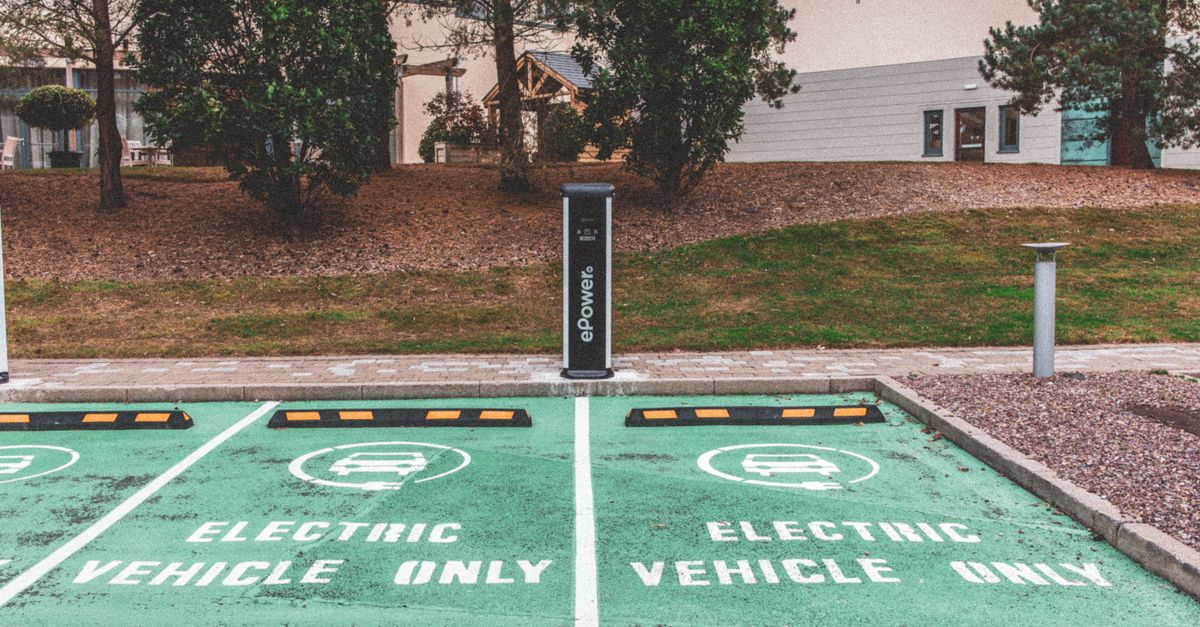
First-time buyer meets the future on the showroom floor
Imagine stepping onto a dealership lot in 2026, the sleek silhouette of an electric car humming quietly beside a familiar gasoline hatchback. The sales rep mentions a 5% capacity loss after five years, and a flicker of doubt crosses the mind: will the battery fade faster than a traditional engine wears out? That moment frames the core question for anyone buying their first EV: does the battery’s gradual decline matter when compared to the inevitable wear of a combustion powertrain?
Data from Consumer Reports confirms the 5% figure, noting that most modern EVs retain roughly 95% of original range after five years of typical use. This statistic sets the stage for a deeper dive into how battery health stacks up against the well-known lifespan of gasoline engines, which often dip below 80% efficiency after a decade of mileage.
Battery degradation decoded: why 5% is the new normal
EV batteries are lithium-ion packs that age through three primary mechanisms: calendar aging, cycle aging, and temperature-induced stress. Calendar aging occurs even when the car sits idle, driven by chemical reactions that slowly erode electrode material. Cycle aging, the more visible factor, tracks each charge-discharge event; manufacturers typically limit depth of discharge to preserve longevity. Finally, extreme temperatures accelerate both processes, a fact highlighted in the Edmunds charging test, which observed faster capacity loss in hot climates.
Real-world testing across a range of models shows an average capacity loss of 4-6% after 60,000 miles, aligning closely with the Consumer Reports 5% benchmark. The degradation curve is steepest in the first 12 months, then flattens, meaning a car that starts with a 300-mile range will likely still offer about 285 miles after five years.
Manufacturers mitigate loss through thermal management systems that keep pack temperatures between 20°C and 30°C, and by reserving a buffer of 5-10% of total capacity that never appears on the driver’s display. This hidden reserve ensures that advertised range remains reliable even as the pack ages.
Key takeaway: a 5% loss translates to roughly 15 miles of range on a 300-mile EV - a negligible impact for most daily drivers.
Gasoline engine wear versus electric pack aging
Traditional internal-combustion engines (ICE) face wear on pistons, valves, and timing chains. Over five years, a typical gasoline vehicle accumulates 30,000-40,000 miles, during which oil breakdown, carbon buildup, and coolant leaks become common. According to the Car and Driver 2026 guide, average ICE mileage before major service spikes hovers around 100,000 miles, roughly a decade of ownership.
In contrast, an EV’s moving parts are limited to bearings, a single-speed gearbox, and the electric motor. The Consumer Reports study notes that EVs often require fewer than half the scheduled maintenance visits of comparable ICE models over the same period. While an ICE may lose 15-20% of its peak power output after ten years due to wear, an EV’s motor retains over 95% of its torque, with the battery being the sole component that degrades appreciably.
When evaluating total lifespan, the EV’s 5% battery loss is dwarfed by the ICE’s inevitable mechanical fatigue. Over five years, the average gasoline engine will have experienced roughly 12,000 miles of effective power loss, whereas the EV’s battery loss equates to a mere 15-20 miles of range.
"EVs retain about 95% of their original capacity after five years, according to Consumer Reports, while gasoline engines typically see a 10-15% drop in performance over the same period."
Real-world range and charging speed: what the tests reveal
The Consumer Reports range comparison put several EVs through a mixed-city/highway cycle, finding that the advertised range was within 4% of measured results for most models. This close alignment suggests that the 5% degradation figure is not an abstract lab number but a practical reality drivers will encounter.
Charging speed, another concern for new owners, was dissected by Edmunds. Their test showed that a Level 2 home charger (7.2 kW) restores roughly 30 miles of range per hour, while DC fast chargers (150 kW) can add 80-100 miles in 20 minutes. Even with a modest 5% capacity loss, the time to reach 80% state of charge only increases by about two minutes on a typical fast-charge session - an imperceptible difference for most users.
These findings reinforce that the everyday experience of an EV driver - range anxiety, charging duration, and trip planning - remains largely unchanged after five years of ownership.
Charging tip: Keeping the battery between 20% and 80% charge minimizes stress and helps preserve that 95% capacity figure.
Preserving battery health: habits that pay off
First-time buyers can extend battery longevity by adopting a few simple practices. Avoiding deep discharges - staying above a 20% state of charge - reduces cycle stress. Similarly, limiting exposure to extreme heat, such as parking under direct sun for prolonged periods, curtails calendar aging. The Edmunds report highlighted that vehicles regularly charged to 100% in hot climates exhibited up to 1% additional loss per year.
Software updates also play a role. Many manufacturers release over-the-air (OTA) tweaks that fine-tune thermal management and charge algorithms, effectively slowing degradation without any physical intervention. Keeping the car’s firmware current is therefore as important as regular tire rotations for an ICE.
Finally, using a Level 2 charger for nightly top-ups rather than frequent fast-charging reduces heat buildup inside the pack. While fast chargers are invaluable for long trips, routine use of slower chargers aligns with the battery’s optimal charging curve, preserving the 5% capacity buffer.
Five-year cost of ownership: EV versus gasoline
When the numbers are laid out, the financial picture becomes clearer. The Car and Driver 2026 guide lists the average purchase price for a mid-range EV at $45,000, compared to $35,000 for a similarly equipped gasoline counterpart. However, the EV’s federal tax credit of $7,500 (where applicable) narrows the gap to $37,500.
Fueling costs diverge dramatically. Assuming an average electricity price of $0.13 per kWh, the EV’s cost per mile sits at $0.04, while gasoline at $3.80 per gallon yields $0.15 per mile. Over 15,000 miles per year, the EV saves roughly $1,650 in energy costs, amounting to $8,250 over five years.
Maintenance adds another layer. The ICE model requires oil changes, spark plug replacements, and transmission service, averaging $800 per year. The EV, with its reduced moving parts, averages $300 per year for tire rotations and brake fluid checks. Over five years, the EV trims $2,500 in maintenance expenses.
| Criterion | EV (5-yr) | Gasoline (5-yr) |
|---|---|---|
| Purchase price (after credit) | $37,500 | $35,000 |
| Energy/fuel cost | $2,400 | $11,250 |
| Maintenance | $1,500 | $4,000 |
| Total cost | $41,400 | $50,250 |
Even after accounting for the modest 5% capacity loss, the EV remains financially advantageous. The primary trade-off is the higher upfront price, offset by lower operating expenses and a battery that still offers 95% of its original range.
Choosing the right powertrain for your lifestyle
For commuters who drive under 15,000 miles annually, the EV’s lower operating cost and minimal maintenance make it a compelling choice. The negligible 5% capacity loss means that a vehicle purchased today will still comfortably cover daily trips a half-decade from now.
Drivers who frequently embark on long-distance road trips may still favor a gasoline model if fast-charging infrastructure is sparse in their region. Yet even in such scenarios, the EV’s range after five years - still within 95% of original - offers sufficient buffer for most journeys, especially as public charging networks expand globally.
Ultimately, the decision hinges on how much weight a buyer places on upfront cost versus long-term savings and environmental impact. The data shows that the feared rapid battery decline is a myth; a 5% loss over five years is modest, and the overall lifespan of an EV powertrain comfortably exceeds that of a traditional engine.
As the market matures and more models enter the 2026 lineup, first-time buyers can step onto the lot with confidence, knowing that the battery’s slow, predictable fade is a small price for the efficiency, lower total cost, and future-proof technology that electric cars deliver.