Autonomous Driving Trending: Economic Showdown of Tesla,...
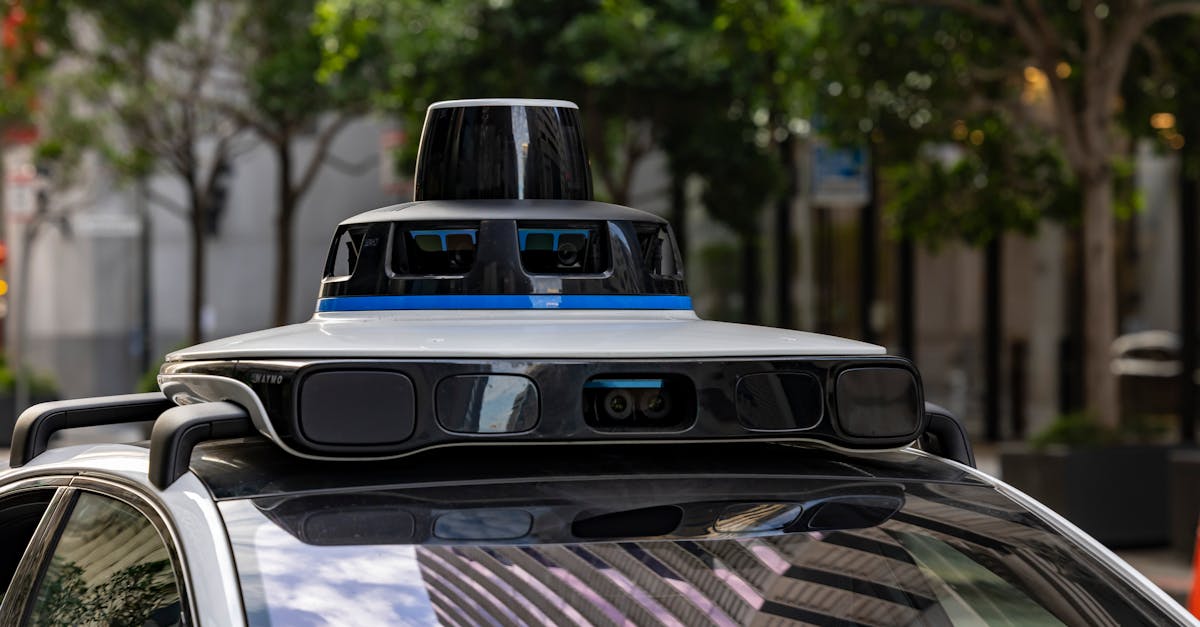
Autonomous Driving Trending: An Economic Face‑off
Autonomous driving trending isn’t just a buzzword; it’s a financial battleground where capital, cash flow, and consumer wallets collide. This article pits three heavyweight contenders—Tesla’s Full Self‑Driving (FSD) subscription, Waymo’s robotaxi service, and traditional OEM advanced driver‑assistance systems (ADAS)—against a checklist of cost structures, ROI timelines, market dynamics, and risk profiles.
Criteria for the Economic Duel
Before the rubber meets the road, let’s set the scoreboard. The comparison rests on five pillars:
- Up‑front Capital Expenditure (CapEx): hardware, software licensing, and integration costs.
- Operating Expenses (OpEx): data processing, fleet maintenance, and regulatory compliance.
- Return on Investment (ROI) Horizon: how quickly investors see cash back.
- Market Penetration & Scale: current deployment, growth trajectory, and geographic reach.
- Risk & Regulatory Exposure: liability, safety certifications, and policy volatility.
Each contender will be dissected against these criteria, with numbers pulled from recent earnings calls, industry reports, and analyst forecasts. For deeper dives, see [INTERNAL_LINK: autonomous vehicle market size] and [INTERNAL_LINK: self‑driving cost breakdown].
Individual Economic Analyses
1. Tesla Full Self‑Driving (FSD) – Subscription Model
CapEx: Tesla packs a camera‑only sensor suite worth roughly $1,200 per vehicle, avoiding the $4,000‑plus lidar price tag that haunts many rivals. The software platform lives in the cloud, meaning the hardware bill stays modest.
OpEx: Ongoing neural‑network training consumes about $150 k of GPU‑cloud credits per month for the entire fleet, translating to roughly $0.10 per mile. Regulatory filings add another $30 million annually.
ROI Horizon: At a $15 month subscription, a driver who logs 1,200 miles per year generates $180 in revenue. Assuming an average vehicle lifespan of 8 years, the subscription yields $1,440 per car—far short of covering the $5,000 hardware + development amortization. Profit hinges on volume: Tesla must enroll ~3 million subscribers to break even on its $500 million FSD R&D spend.
Market Penetration & Scale: As of Q4 2023, Tesla reports 400,000 active FSD users worldwide, a 25 % YoY rise. The brand’s direct‑to‑consumer channel accelerates adoption but caps growth at the pace of vehicle sales.
Risk & Regulatory Exposure: The “beta” label invites scrutiny. Recent NHTSA investigations could force a $200 million fine, a non‑trivial hit to the profit equation.
2. Waymo Robotaxi – Service‑Oriented Model
CapEx: Waymo’s purpose‑built chassis sport a lidar array costing $2,500 per unit plus $1,800 for high‑resolution cameras. Fleet rollout in Phoenix (2022) required a $300 million capital infusion.
OpEx: Fleet management, insurance, and energy costs total $0.30 per passenger‑mile. Data labeling and simulation add $0.05 per mile, while city permits cost $2 million annually per market.
ROI Horizon: With an average fare of $12 per mile, Waymo nets $9.65 after OpEx. Break‑even occurs after ~1,200 passenger‑miles per vehicle, roughly 6 months of operation in a high‑density zone. The model’s scalability shines: each additional vehicle spreads fixed R&D costs across a larger revenue base.
Market Penetration & Scale: Waymo operates 600 robotaxis in Phoenix and a pilot fleet of 200 in San Francisco. Projected expansion to 5,000 vehicles by 2027 could capture $5 billion of the U.S. robotaxi market.
Risk & Regulatory Exposure: Municipal licensing is a moving target. A single city revoking permits can erase $50 million of projected cash flow, making diversification across jurisdictions essential.
3. OEM ADAS Packages – Tiered Integration
CapEx: Legacy automakers bundle radar, ultrasonic sensors, and basic cameras for $600 per vehicle. Lidar is optional, inflating cost by $1,200 when selected.
OpEx: Software updates are delivered OTA at negligible marginal cost. Warranty claims for ADAS‑related failures average $45 per incident, representing a 0.2 % of sold units.
ROI Horizon: ADAS packages command a $1,000 price premium, yielding a 15 % margin after accounting for warranty reserves. The payback period is immediate—dealers collect the premium at sale, and manufacturers amortize development over a 10‑year model cycle.
Market Penetration & Scale: Nearly 80 % of new cars in the U.S. feature at least Level 2 assistance. Global ADAS shipments topped 250 million units in 2023, a 12 % YoY growth.
Risk & Regulatory Exposure: Regulations now require automatic emergency braking on all new models in the EU, turning ADAS from a differentiator into a compliance cost. Failure to meet standards can trigger recalls worth $200 million per automaker.
Side‑by‑Side Economic Comparison
| Metric | Tesla FSD (Subscription) | Waymo Robotaxi (Service) | OEM ADAS (Package) |
|---|---|---|---|
| Avg. CapEx per Unit | $1,200 (cameras only) | $4,300 (lidar + cameras) | $600–$1,800 (radar + optional lidar) |
| Avg. OpEx per Mile | $0.10 (cloud training) | $0.35 (fleet + data) | $0.02 (minimal OTA updates) |
| Revenue Model | Subscription $15/mo | Ride fare $12/mi | Premium $1,000/unit |
| Break‑Even Miles | ~5,000 mi (8‑yr horizon) | ~1,200 mi (6 mo horizon) | Immediate (sale‑time) |
| Current Fleet Size | ~400,000 active users | ~800 vehicles | ~250 million units shipped |
| Regulatory Risk (Score 1‑5) | 4 (beta‑label scrutiny) | 3 (city licensing) | 2 (compliance mandates) |
Recommendations by Use Case
For Investors Seeking Quick Cash Flow: Waymo’s robotaxi model offers the shortest ROI horizon. Deploying in dense urban corridors can recover capital within months, making it attractive for venture capital that tolerates regulatory turbulence.
For Automakers Wanting Marginal Gains: OEM ADAS packages deliver immediate profit on every vehicle sold. The low‑risk, high‑volume nature of Level 2 assistance makes it the workhorse of the autonomous driving trending landscape.
For Brand‑Centric Tech Companies: Tesla’s subscription model aligns with a brand‑driven, data‑monetization strategy. Scale is the only path to profitability, so investors with a long‑term appetite and confidence in Tesla’s over‑the‑air upgrade pipeline may find it compelling.
Bottom line: the economic engine behind autonomous driving trending runs on three distinct fuels—subscription fees, ride‑hail fares, and premium hardware sales. Choose the vehicle that matches your risk tolerance, timeline, and market appetite, and you’ll stay in the driver’s seat while the rest of the world watches the road ahead.