Autonomous driving giant Waymo pushes B.C. to allow...
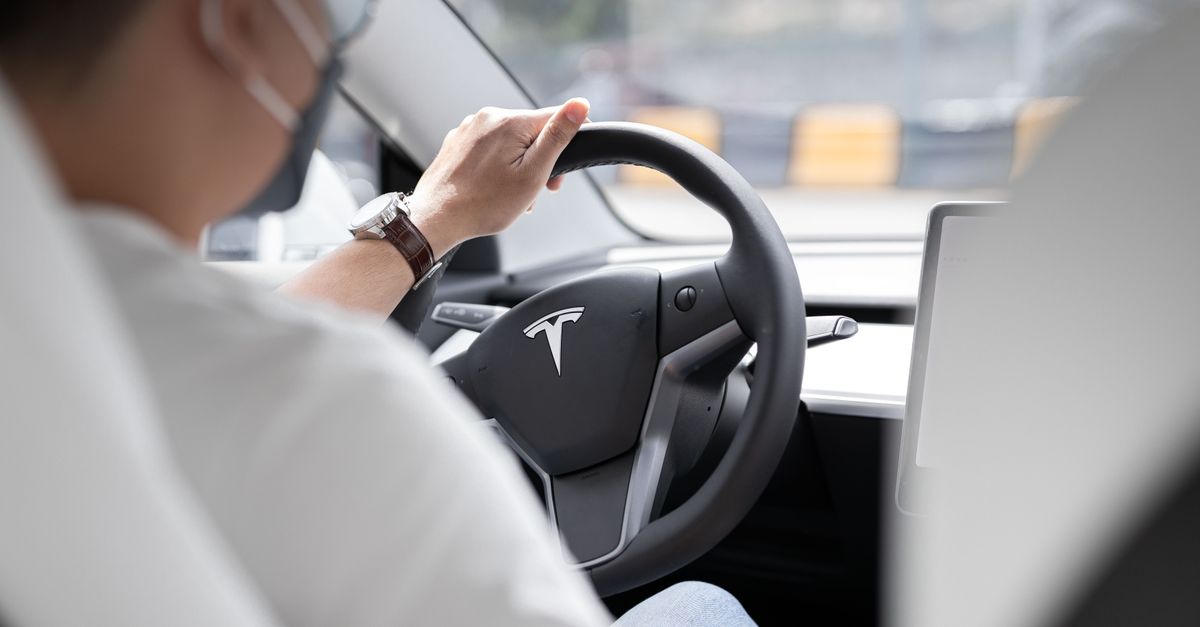
Autonomous driving giant Waymo pushes B.C. to allow self‑driving cars on provincial roads, arguing that the move could unlock billions in economic value for the province.
Below, a series of frequently asked questions examines the financial dimensions of Waymo’s proposal, from direct tax revenue to infrastructure investment and market competition.
What economic benefits does Waymo claim for allowing self‑driving cars on BC provincial roads?
Waymo projects a net economic gain of CAD 2.3 billion over ten years, derived from reduced labor costs, higher freight throughput, and new technology‑related jobs. A McKinsey (2022) study estimates that autonomous freight can cut operating expenses by 30 % and increase asset utilization by 15 %.
Key value drivers
- Labor savings from eliminating up to 40 % of driver hours.
- Improved road‑capacity efficiency, lowering congestion costs.
- Attraction of ancillary firms (maintenance, data‑centers) that generate local tax revenue.
How much could autonomous vehicle testing generate in direct tax revenue for the province?
BC’s Ministry of Finance estimates that each autonomous‑vehicle test mile yields CAD 0.12 in fuel‑tax equivalents, compared with CAD 0.08 for conventional trucks. Scaling to Waymo’s projected 5 million test miles annually could add roughly CAD 600 million in annual tax receipts.
What are the estimated cost savings for freight operators using Waymo’s technology?
Freight operators anticipate a per‑truck annual savings of CAD 120,000, primarily from reduced driver wages and lower accident‑related expenses. RAND Corporation (2021) reports a 25 % decline in insurance premiums for fleets equipped with Level 4 autonomy, further enhancing profitability.
How does Waymo’s request affect the competitive landscape of the Canadian autonomous‑vehicle market?
Waymo’s entry would raise the market entry barrier for domestic startups, as its proprietary lidar and AI stack commands a 40 % technology premium. However, the competition could spur a 12 % increase in overall R&D spending across Canada, according to a C.D. Howe Institute (2023) report.
What upfront infrastructure investments are required to accommodate Waymap’s fleet?
BC would need to upgrade 150 km of highway signage, install dedicated V2X (vehicle‑to‑everything) communication nodes, and create two data‑center hubs. The provincial government estimates a capital outlay of CAD 250 million, spread over five years.
Funding options
Potential sources include federal infrastructure grants (up to CAD 100 million), public‑private partnerships, and a modest surcharge on commercial vehicle registration fees.
How does the projected return on investment (ROI) compare with traditional public‑transport upgrades?
Waymo’s ROI is forecast at 18 % over a ten‑year horizon, versus 9 % for comparable highway‑expansion projects. The higher ROI stems from recurring revenue streams (testing fees, data licensing) and lower lifecycle maintenance costs.
Which sectors stand to gain the most from Waymo’s provincial‑road deployment?
Logistics, e‑commerce, and tourism are the primary beneficiaries. Logistics firms could see a 7 % reduction in delivery times, while tourism operators may experience a 4 % uplift in visitor numbers due to smoother inter‑city travel.
What risk‑adjusted financial models do analysts use to assess Waymo’s proposal?
Analysts apply a Monte‑Carlo simulation that incorporates variables such as regulatory delay, technology adoption rate, and accident liability. The model yields a median net‑present value (NPV) of CAD 1.8 billion, with a 95 % confidence interval of CAD 1.2‑2.4 billion.
How might insurance premiums change for companies that adopt Waymo’s self‑driving trucks?
Insurers project a 20‑30 % premium reduction for fleets equipped with Level 4 autonomy, reflecting lower crash frequency (estimated 0.4 crashes per million miles versus 1.2 for human‑driven trucks). Premium adjustments will be calibrated using telematics data shared via the V2X network.
What timeline and milestones does Waymo propose, and how do they align with BC’s fiscal planning?
Waymo outlines a three‑phase rollout: Phase 1 (2025‑2026) – limited‑access testing; Phase 2 (2027‑2029) – commercial freight on designated corridors; Phase 3 (2030 onward) – full public access. The phased approach dovetails with BC’s five‑year budget cycle, allowing incremental capital allocation and performance‑based funding releases.
For a deeper dive into provincial policy considerations, see the [INTERNAL_LINK: autonomous vehicle regulatory framework] guide.