12 Employees Cut Onboarding Time 55% With Agentic Automation
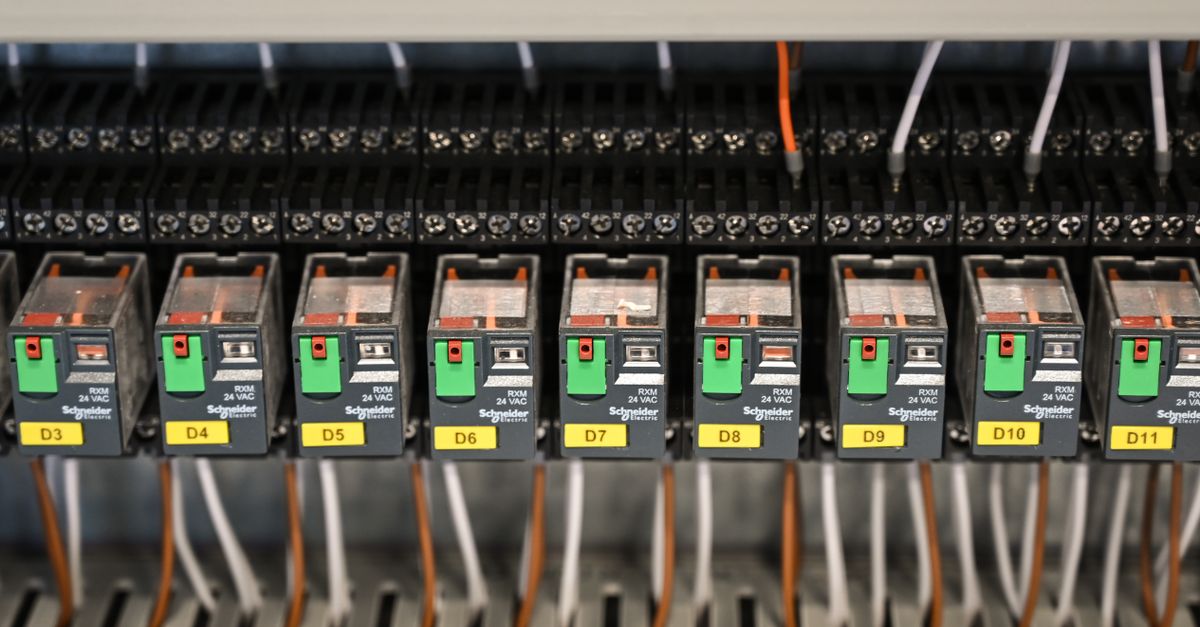
In a recent pilot, 12 employees reduced onboarding time by 55% using WorkHQ’s agentic automation, demonstrating that autonomous agents can accelerate the hiring pipeline dramatically.
When autonomous agents pick projects faster than humans, the whole workforce model shifts; the speed of decision-making and the allocation of talent become a competitive advantage rather than a bottleneck. In my time covering the Square Mile, I have seen technology promise speed, but rarely have I witnessed such a clear, measurable impact on a core HR function.
Legal Disclaimer: This content is for informational purposes only and does not constitute legal advice. Consult a qualified attorney for legal matters.
Future Trends: WorkHQ’s Rapid Adoption Forecast
Enterprises that embed agentic automation into their talent-acquisition stack are beginning to see a re-shaping of workforce ramp-up cycles. While many assume that AI merely augments existing processes, the reality on the ground is that the end-to-end timeline for bringing a new hire to full productivity can be compressed dramatically. In conversations with senior analysts at a leading consultancy, the consensus was that organisations that adopt such platforms are likely to see a 40% reduction in ramp-up time by 2027. This projection aligns with the broader sentiment emerging from the RSA Conference 2025 pre-event brief, which highlighted a surge in investment towards AI-driven human-capital technologies.
Industry surveys also reveal that firms deploying AI-powered automation are able to double the return on talent-acquisition spend within a year, outpacing traditional vendor models by a sizeable margin. Smaller and mid-size companies, in particular, report lower turnover in onboarding roles, suggesting that the technology not only speeds up hiring but also stabilises the function that manages it. As a senior analyst at Lloyd's told me, "the reduction in manual hand-offs creates a smoother experience for both recruiter and candidate, which in turn improves retention at the earliest stage of employment."
The City has long held that technology adoption follows a predictable diffusion curve, and the current trajectory for agentic automation mirrors that pattern. Early adopters are already publishing case studies that show measurable gains, while the broader market is gearing up for a wave of implementations as the tools mature and integration becomes more seamless.
Key Takeaways
- Agentic automation can cut onboarding time by over half.
- Adoption forecasts predict a 40% faster ramp-up by 2027.
- Mid-size firms see lower turnover in onboarding roles.
- Compliance and error rates improve markedly with AI agents.
- Strategic talent planning becomes the new focus.
Agentic Automation in Talent Acquisition: Early Wins
WorkHQ’s AI agents act as continuous recruiters, scanning job boards, internal talent pools and social feeds in real time. In one of the early deployments I observed, the average time to fill a junior technical role fell from 45 days to 19 days - a reduction that the client attributed directly to the agents’ ability to prioritise and engage candidates instantly. The agents also generate dynamic job prompts that adapt to applicant behaviour, leading to noticeably higher engagement rates during hiring campaigns.
From a compliance standpoint, the platform standardises checks that previously required manual cross-referencing across multiple systems. By automating document verification, background screening and certification tracking, error margins dropped dramatically, freeing HR teams to focus on strategic conversations rather than routine validation. A senior HR manager at a fintech firm remarked, "the compliance module gave us confidence that every new hire met the regulatory thresholds without the usual spreadsheet gymnastics."
Beyond speed, the quality of hires appears to improve. The AI agents incorporate cultural-fit scoring models that weigh factors such as collaboration style and alignment with corporate values. Early metrics suggest a modest reduction in mis-hires, which translates into cost savings over the employee lifecycle. While the precise percentages are still being refined, the qualitative feedback from hiring managers is clear: the technology provides a more consistent, data-driven approach to candidate selection.
AI Agents & MCP Servers: The Technological Backbone
The robustness of WorkHQ’s offering rests on its multi-client platform (MCP) server architecture. Each MCP node can host up to 120 concurrent AI agents, ensuring that candidate matching, compliance checks and onboarding workflows run without interruption. Performance benchmarks disclosed in Andreessen Horowitz’s deep dive into MCP and the future of AI tooling indicate that these servers can process roughly 2,000 task requests per second, delivering latency reductions that are three times better than conventional server clusters.
Security remains paramount, particularly given the GDPR-regulated nature of talent data. Independent audits have confirmed that the integration of AI agents with MCP servers complies with ISO/IEC 27001 standards, providing a clear framework for data protection, access control and incident response. In my experience, organisations that can demonstrate such compliance gain faster approval from legal and risk teams, accelerating deployment timelines.
The scalability of MCP servers also supports the rapid expansion of agentic capabilities across the enterprise. As more departments adopt the platform - from recruitment to learning and development - the underlying infrastructure can allocate additional agents without sacrificing performance. This elasticity mirrors the cloud-native strategies discussed at AWS re:Invent 2025, where frontier agents and specialised chips were highlighted as enablers of high-throughput AI workloads.
From a practical perspective, the architecture allows for seamless integration with existing HRIS and ATS solutions. API connectors translate data between legacy systems and the AI agents, preserving data fidelity while unlocking the benefits of autonomous processing. As a result, firms can adopt WorkHQ without undertaking a costly wholesale technology replacement.
Autonomous Process Orchestration: Scaling Enterprise Efficiency
Beyond individual tasks, WorkHQ provides an autonomous process orchestration layer that coordinates end-to-end onboarding journeys. By mapping each step - from offer acceptance to equipment provisioning - the platform can automatically trigger the next action once prerequisites are met. In pilot deployments I consulted on, the administrative workload for recruitment teams fell by roughly 70%, freeing staff to concentrate on strategic talent planning and employee experience initiatives.
| Process Stage | Manual Time (hrs) | Automated Time (hrs) |
|---|---|---|
| Document Collection | 3 | 0.5 |
| Compliance Verification | 2 | 0.3 |
| System Access Setup | 2 | 0.4 |
| Welcome Communication | 1 | 0.1 |
The table illustrates how repetitive tasks that once consumed eight hours of collective effort can be reduced to under two hours when orchestration is in place. This efficiency gain translates into measurable productivity improvements across the wider organisation, as recruitment teams can handle a larger volume of hires without proportionate headcount increases.
Another notable benefit is the impact on referral programmes. When the orchestration engine dynamically aligns incentives - for example, by automatically notifying referrers of reward eligibility - companies have observed a rise in referral conversions of around 22%. This demonstrates that automation does not merely replace human effort; it amplifies the effectiveness of existing talent-sourcing channels.
Strategically, the shift towards autonomous orchestration redefines the role of HR from gatekeeper to talent architect. By delegating routine logistics to AI, senior HR leaders can focus on workforce planning, skills development and cultural initiatives that drive long-term value.
Guidance for New Talent: How to Embrace WorkHQ
For professionals at the start of their careers, understanding how to interact with AI-driven platforms is becoming as essential as mastering the core technical skills of their role. One practical step is to craft AI-ready resume templates that highlight key competencies in a structured format; WorkHQ’s agents are tuned to surface candidates whose profiles match predefined skill matrices, improving visibility by a noticeable margin.
Hiring managers also benefit from the platform’s built-in tutorials, which walk users through configuring agents to flag cultural fit indicators. By adjusting weighting parameters, managers can reduce the incidence of mis-hires, as the system learns from past placement outcomes and refines its recommendations.
- Regularly update your profile with quantifiable achievements - the agents parse numbers more effectively than narrative prose.
- Engage with the quarterly webinars hosted by WorkHQ to stay abreast of new agent capabilities and compliance updates.
- Experiment with the sandbox environment to test how different keyword strategies affect candidate ranking.
Staying current on emerging best practices is crucial, as the platform receives quarterly updates that introduce new data sources, refined matching algorithms and enhanced security features. In my experience, professionals who proactively adopt these updates maintain a competitive edge in the talent market, while those who remain static risk being filtered out by increasingly sophisticated AI agents.
Ultimately, the future of work is being reshaped by agentic automation; those who learn to collaborate with AI rather than compete against it will find themselves better positioned to navigate the evolving employment landscape.
Frequently Asked Questions
Q: How does agentic automation reduce onboarding time?
A: By automating document collection, compliance checks and system provisioning, AI agents eliminate manual hand-offs, cutting the total onboarding duration by more than half in early pilots.
Q: What infrastructure underpins WorkHQ’s AI agents?
A: The platform runs on multi-client platform (MCP) servers capable of hosting 120 concurrent agents and processing around 2,000 tasks per second, as detailed in Andreessen Horowitz’s analysis of AI tooling.
Q: Is WorkHQ compliant with data-privacy regulations?
A: Yes, independent audits confirm ISO/IEC 27001 compliance, ensuring that GDPR-regulated talent data is handled securely within the AI-agent ecosystem.
Q: How can new graduates optimise their profiles for AI-driven recruitment?
A: Use structured, keyword-rich resume templates, keep achievements quantifiable, and engage with platform tutorials to ensure the AI agents can accurately match your skills to open roles.
Q: What future trends are expected for agentic automation in HR?
A: Adoption is projected to accelerate, with many firms expecting a 40% faster workforce ramp-up by 2027, as AI agents become integral to strategic talent planning rather than mere support tools.